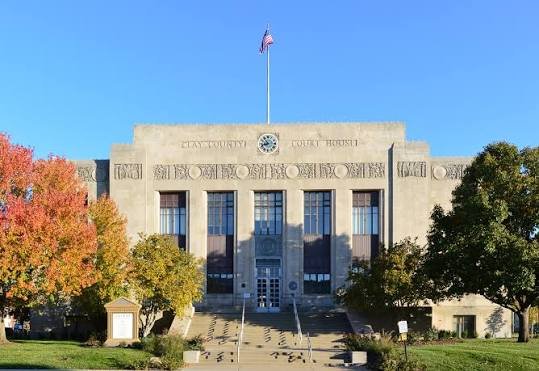
County Judge Curtis Parrish removed a sitting county commissioner from office in December 2025, after Jason Corley announced a bid for Congress — the culmination of a genuinely fraught relationship between the two Republican officials that had already spilled into public arguments at budget hearings over county employee pay raises. Lubbock County, home to Lubbock and more than 320,000 residents in the West Texas South Plains, has had a notably contentious year at the top of its government. Here’s how the county’s administration, jail, courts, and sheriff’s office actually work.

Lubbock County Quick Facts
| Category | Details |
| County Seat | Lubbock, Texas |
| Population | Over 320,000 |
| Governing Body | Lubbock County Commissioners Court |
| County Judge | Curtis Parrish |
| County Judge Phone | (806) 775-1679 |
| Sheriff | Kelly S. Rowe |
| Sheriff’s Office Phone | (806) 775-1600 |
| District Clerk | Sara L. Smith |
| County Clerk | Kelly Pinion |
| Criminal District Attorney | Sunshine Stanek |
| Court System | Lubbock County District and County Courts |
| Time Zone | Central Time (CT), observes Daylight Saving Time |
A Commissioners Court in Genuine Political Conflict
Lubbock County operates under Texas’s standard county-judge system, with the Commissioners Court — County Judge Curtis Parrish plus four precinct commissioners — handling budget and policy. That structure has been under real strain recently: Parrish removed Commissioner Jason Corley from office in December 2025 shortly after Corley announced a congressional campaign, the latest escalation in tension between the two Republicans. The friction had already been visible publicly at budget hearings, where Corley challenged Parrish directly over tax rates and pay raises intended to help the county retain quality employees — particularly the Sheriff and clerks’ offices, which Parrish argued needed higher pay to compete for qualified staff.
A few structural basics:
- The Commissioners Court and county administration operate out of downtown Lubbock
- Elected offices — including the Sheriff, District Clerk, County Clerk, Criminal District Attorney, and Auditor — run independently of the Commissioners Court
- Lubbock County’s 2026 general election includes County Judge, County Clerk, District Attorney, District Clerk, Treasurer, county commission seats, and multiple judicial races, all on the November 3 ballot
The Sheriff’s Office and Court Administration
Kelly S. Rowe serves as Lubbock County Sheriff, an office overseeing the standard range of county law enforcement duties under Texas law:
- Operating the Lubbock County Jail
- Patrolling unincorporated areas outside the city of Lubbock and other incorporated municipalities
- Providing courthouse security and prisoner transport
- Serving civil process, including evictions and warrants
Because the city of Lubbock runs its own municipal police department, the Sheriff’s Office primarily covers unincorporated county areas directly, while jail operations and court security extend across the entire county.
Lubbock County’s judiciary includes multiple District Courts, each presided over by an elected judge — the 72nd, 99th, 137th, and 140th District Courts among them — handling the county’s felony criminal and major civil caseload.
Finding Someone in the Lubbock County Jail
- The Sheriff’s Office maintains inmate information resources, generally accessible through its official channels
- Booking information typically takes a few hours to post after an arrest
- Bond can generally be posted at the jail or through the Sheriff’s Office’s approved payment channels
- Visitation requires advance scheduling and valid photo ID
- Call the Sheriff’s Office directly at (806) 775-1600 for current booking or custody status questions
The County Clerk’s Records Policy: What It Won’t Do
Lubbock County’s County Clerk, Kelly Pinion, maintains an unusually explicit public policy about the limits of the office’s record-search obligations. The office states clearly that staff will not conduct searches beyond what’s specifically authorized by statute — the only statutorily authorized record search is for Federal Tax Liens under Texas Property Code 14.004(d). This isn’t arbitrary: the office’s Error & Omissions Insurance coverage only applies to actions that are statutorily required duties, and a 1959 Texas Attorney General opinion (WW-607) explicitly states the County Clerk has no legal duty to search records under their control and guarantee correctness.
Practically, this means:
- If you need a records search performed, confirm in advance whether that specific search falls within the County Clerk’s statutory authority
- Federal Tax Lien searches are the clear exception where the office will search on your behalf
- For other record types, you may need to conduct the search yourself using available public tools, or consult an attorney or title company for more complex searches
Courts and the District Clerk
Sara L. Smith serves as Lubbock County’s District Clerk, managing felony criminal cases, family law matters, and major civil disputes, while the separate County Clerk’s office (Kelly Pinion) handles misdemeanors, probate, and county-level civil matters, plus vital records like marriage licenses — the standard Texas split between these two offices.
A few practical points:
- Case lookup is generally available online before an in-person visit is necessary
- Confirm which clerk’s office applies to your case type — this distinction trips up many first-time filers in Texas counties generally
- Self-help resources exist for people without an attorney, though staff can’t offer legal advice
- The Lubbock-Crosby County Community Supervision and Corrections Department, a separate agency, supervises adults placed on probation by Lubbock District and County Courts-at-Law
Before You Visit
- Bring valid, government-issued photo ID to any county facility — courthouse, jail, or administrative building
- Confirm whether your matter falls under the District Clerk or County Clerk before showing up
- Don’t assume the County Clerk’s office will perform a general records search on your behalf — confirm the search is statutorily authorized first, or plan to conduct it yourself
- Call ahead for jail visitation and bond questions given the county’s standard administrative hours (8:00 AM–5:00 PM, closed for lunch 12:00–1:00 PM)
Common Questions
Q1. What happened with Lubbock County’s commissioner removal in December 2025?
County Judge Curtis Parrish removed Commissioner Jason Corley from office shortly after Corley announced a congressional campaign, following months of public friction between the two officials, including disputes at budget hearings over county employee pay. Check current Lubbock County government sources for the latest developments on this ongoing political situation.
Q2. How do I find out if someone is in the Lubbock County Jail?
Contact the Sheriff’s Office directly at (806) 775-1600 for current booking and custody status information, or check their available online inmate resources. Allow a few hours after a recent arrest for booking information to appear.
Q3. Will the Lubbock County Clerk perform a records search for me?
Generally, no — except for Federal Tax Lien searches, which are the only statutorily authorized search the office will conduct on a requester’s behalf. For other record types, confirm what search options are available to you directly, since the office’s insurance coverage and legal obligations don’t extend to voluntary search services.
Q4. What’s the difference between the District Clerk and County Clerk in Lubbock County?
District Clerk Sara L. Smith handles felonies, family law, and major civil litigation. County Clerk Kelly Pinion handles misdemeanors, probate, county-level civil matters, and vital records like marriage licenses. Confirm which office applies to your specific matter before filing to avoid a wasted trip.