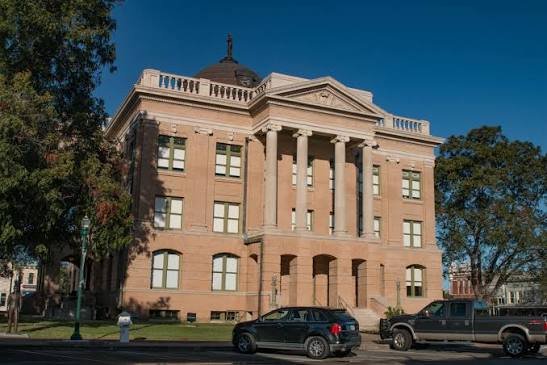
Williamson County’s downtown Georgetown jail traces back to a Recorded Texas Historic Landmark built around 1888 — but the county is now actively planning to move its entire modern jail and justice center out of downtown entirely, with commissioners describing the coming decisions as among the most substantive in county history. Add a brand-new elected sheriff who just took over from a predecessor amid a genuinely public transition, and Williamson County, one of the fastest-growing counties in the country just north of Austin with more than 547,000 residents, has real change underway. Here’s how the county’s administration, jail, courts, and sheriff’s office work right now.
Williamson County Quick Facts
| Category | Details |
| County Seat | Georgetown, Texas |
| Population | Over 547,000 |
| Land Area | Approximately 1,137 square miles |
| Governing Body | Williamson County Commissioners Court |
| County Judge | Stephen Snell, appointed after Bill Gravell’s departure |
| Sheriff | Matthew Lindemann, elected 2024 |
| Sheriff’s Office Phone | (512) 943-1300 |
| Main Jail Facility | Williamson County Jail, Georgetown |
| Jail Relocation Plan | Under active discussion, potential move by 2030 |
| Court System | Williamson County District and County Courts |
| Time Zone | Central Time (CT), observes Daylight Saving Time |
A County Judge Who Left for Washington, and a New Sheriff
Williamson County operates under Texas’s standard county-judge system, with the Commissioners Court — the County Judge plus four precinct commissioners — handling budget and policy. Bill Gravell, a vocal conservative who campaigned on fiscal restraint, served as County Judge before leaving to take a position with the Trump administration. Stephen Snell was appointed to fill the remainder of Gravell’s term, which runs through the end of 2026.
Meanwhile, the Sheriff’s Office also changed hands entirely in the 2024 election. Matthew Lindemann, previously a District 3 Constable with 28 years at the Texas Rangers before retiring as a lieutenant, defeated incumbent Sheriff Mike Gleason in a race that drew public support from Judge Gravell himself. Gravell emphasized at the time that the office’s roughly 500 employees and the roughly 600 inmates then in the jail needed a smooth transition the moment the new sheriff took office at midnight on January 1.
A few structural basics:
- The Commissioners Court and county administration operate out of Georgetown, the county seat
- Elected offices — including the Sheriff, District Clerk, County Clerk, and Tax Assessor-Collector — run independently of the Commissioners Court
- Williamson County held elections for county judge, county clerk, district clerk, treasurer, and other offices in November 2026, following the earlier 2024 cycle that brought in the new sheriff
Plans to Relocate the Jail Entirely
County Judge Gravell told commissioners before a December workshop that Williamson County was approaching “the most substantive discussion” in its history about the future of essential county services. Commissioners have since agreed to explore relocating the county’s Jail and Justice Center functions from downtown Georgetown to a new facility, with a potential target of 2030. County staff presented plans showing as many as 16 possible facility relocations over the following five years, and commissioners agreed to hire a program manager specifically to coordinate the county’s interim facilities plan during this transition.
Separately, commissioners have moved forward on adding a new Williamson County state district court, using facility space freed up as departments shift into newly opened buildings — a sign the county’s rapid growth is driving expansion across multiple fronts at once, not just the jail.
The Sheriff’s Office Under New Leadership
Matthew Lindemann took office pledging to enforce all laws equally regardless of a person’s position in the community, a message Judge Gravell echoed at the time of the transition. The Sheriff’s Office responsibilities include:
- Operating the Williamson County Jail
- Patrolling unincorporated areas outside the county’s many incorporated cities
- Providing courthouse security and prisoner transport
- Serving civil process, including evictions and warrants
The Sheriff’s Office’s Jail Division currently staffs roughly 14 full-time deputies dedicated specifically to detention operations, alongside the broader department handling patrol and investigations across the county’s rapidly growing footprint.
Finding Someone in the Williamson County Jail
- The Sheriff’s Office maintains inmate information resources, reachable at (512) 943-1300
- Given the ongoing discussions about relocating jail operations, confirm the current facility address and procedures before visiting, since this could shift over the coming years
- Booking information typically takes a few hours to post after an arrest
- Bond can generally be posted at the jail or through approved payment channels
- Visitation requires advance scheduling and valid photo ID
Courts and the Clerk’s Offices
Williamson County splits case types the way most Texas counties do: the District Clerk manages felony criminal cases, family law, and larger civil disputes through the 355th Judicial District Court and family courts, while the County Clerk, currently Nancy E. Rister, handles misdemeanors, probate, smaller civil matters, and also serves as the county’s chief elections officer.
The county operates numerous separate court locations, including a Justice of the Peace court, County Court, County Court at Law, District Court, and several municipal courts across cities like Cedar Park, Florence, and Georgetown — a genuinely large number of distinct courts for residents to navigate.
A few practical points:
- Case lookup is typically available online before an in-person visit is necessary
- Confirm which of Williamson County’s many courts — district, county, justice of the peace, or a specific municipal court — applies to your matter before showing up
- Self-help resources exist for people without an attorney, though staff can’t offer legal advice
- Given the county’s active facility relocation discussions, confirm current court locations before assuming an older address is still accurate
A Few Practical Notes
- Bring photo ID to any county facility — courthouse, jail, or administrative building
- Confirm whether your matter involves a city police department or the Sheriff’s Office, since most incorporated Williamson County cities run independent police forces
- Given the county’s active jail relocation planning, don’t assume the downtown Georgetown jail address will remain accurate long-term — check current information before a visit
- Call ahead for court and jail hours, since Williamson County’s rapid growth means facility changes are actively underway
Common Questions
Q1. Is Williamson County actually moving its jail?
County commissioners have agreed to explore relocating jail and justice center functions from downtown Georgetown to a new facility, with a potential target around 2030, and have begun hiring a program manager to coordinate the transition. This remains in the planning stages — check current county announcements for the latest status before assuming any move has happened.
Q2. How do I find out if someone is in the Williamson County Jail?
Contact the Sheriff’s Office at (512) 943-1300 or use their inmate information resources. Given the county’s active discussions about relocating jail operations, confirm the current facility address before visiting.
Q3. Who is the current Williamson County Sheriff?
Matthew Lindemann, a former Texas Ranger lieutenant and District 3 Constable, was elected in 2024, defeating incumbent Sheriff Mike Gleason. He took office at the start of 2025, inheriting an office of roughly 500 employees and responsibility for the county jail.
Q4. What’s the difference between the District Clerk and County Clerk in Williamson County?
District Clerk handles felonies, family law, and larger civil suits through the 355th Judicial District Court. County Clerk handles misdemeanors, probate, smaller claims, and also serves as the county’s chief elections officer. If you’re unsure which applies, call either office to confirm before filing.