One evening in March 2021, a 26-year-old named Marvin Scott III was booked into the Collin County Jail on a marijuana possession charge. Hours later he was dead — restrained on a bed, pepper-sprayed, hooded — and the case became a defining moment for how this fast-growing North Texas county runs its detention system. Collin County, now home to well over 1.3 million people and one of the fastest-growing populations in the state, has had to rebuild public trust in its jail while keeping pace with explosive suburban growth. Here’s what residents actually need to know about how the county’s government, courts, jail, and sheriff’s office work.
Collin County Quick Facts
| Category | Details |
| County Seat | McKinney, Texas |
| Population | Roughly 1.3 million (2025 estimate) |
| Largest City | Plano |
| Governing Body | Collin County Commissioners Court |
| County Judge | Chris Hill |
| Sheriff’s Office Address | 4300 Community Ave, McKinney, TX 75071 |
| Main Detention Facility | Collin County Detention Facility, McKinney |
| Court System | Collin County District and County Courts |
| Time Zone | Central Time (CT), observes Daylight Saving Time |
A County Growing Faster Than Its Government Can Keep Up
Collin County’s population has ballooned past 1.3 million, up from just over 1 million in the 2020 census — growth concentrated in Plano, Frisco, McKinney, and Allen. That pace has strained everything from roads to courtrooms, and it shows in how county government operates. The Commissioners Court, made up of County Judge Chris Hill and four precinct commissioners, handles budget and policy, functioning as chief administrator for a county whose needs shift year to year as new subdivisions and school districts come online.
Hill has held the office since 2018 and drew national attention during the pandemic for setting Collin County’s COVID-19 rules apart from neighboring Dallas and Tarrant counties — a reminder that Texas gives county judges real discretion during emergencies, not just ceremonial authority.
A few things worth knowing about how the county operates day to day:
- Elected offices — including the Sheriff, District Clerk, County Clerk, and Tax Assessor-Collector — run independently of the Commissioners Court
- Property tax appraisal (handled by the Collin Central Appraisal District) is separate from collection (handled by the Tax Assessor-Collector), a split common across Texas but easy to mix up
- Several county departments have added satellite offices in Frisco, Allen, and Plano rather than requiring every resident to drive to McKinney
What Happened at the Jail — and What Changed
The Marvin Scott case remains the most consequential event in the Collin County Sheriff’s Office’s recent history. Scott, who had a diagnosed history of schizophrenia, was arrested for less than two ounces of marijuana and taken to the jail, where he began exhibiting what officials called “strange behavior.” Detention officers strapped him to a restraint bed, used pepper spray, and placed a spit mask over his face. He became unresponsive and died at a hospital that night. The county medical examiner ruled it a homicide, citing “fatal acute stress response” during the struggle.
Sheriff Jim Skinner fired seven detention officers and accepted an eighth’s resignation within weeks, saying the officers had violated department policy. A grand jury later declined to indict any of them, though it took the unusual step of recommending a formal work group study the incident to prevent a repeat.
The fallout reshaped public engagement with the Sheriff’s Office — including a well-publicized incident where a veteran was arrested for contempt during a commissioners meeting after criticizing how leadership handled Scott’s death, a moment that later became part of a county judge campaign.
Beyond that history, the Sheriff’s Office handles the standard range of Texas sheriff duties:
- Running the Collin County Detention Facility in McKinney
- Patrolling unincorporated areas outside the county’s many incorporated cities, most of which — Plano, Frisco, McKinney, Allen — maintain their own police departments
- Providing courthouse security and prisoner transport
- Serving civil process, including evictions and warrants
Finding Someone in Custody
If you’re trying to locate someone booked into the Collin County jail:
- The Sheriff’s Office offers an online inmate search tool, generally requiring full name to pull a record
- Booking information typically doesn’t appear immediately — allow several hours after an arrest
- Given the jail’s history, families with concerns about a detainee’s mental health status should raise it explicitly and in writing when contacting the facility
- Bond can usually be posted in person at the jail or through the county’s approved payment system
- Visitation requires scheduling ahead of time and valid photo ID
Courts and the Clerk’s Office
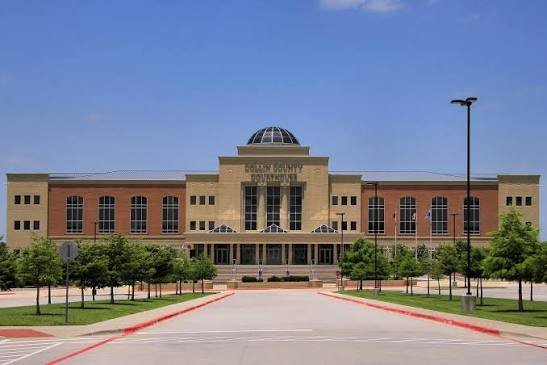
Collin County splits its court system the way most Texas counties do: the District Clerk manages felony criminal cases, family law, and larger civil disputes, while the County Clerk handles misdemeanors, probate, and smaller civil matters, plus vital records like marriage licenses. Both operate out of the Collin County Courthouse in McKinney.
If you’re filing or researching a case:
- Online case lookup is available through the District Clerk’s website before you need to visit in person
- Confirm which clerk’s office applies to your case type — this trips up more people than almost anything else in the Texas county system
- Self-help resources exist for people without an attorney, though staff can’t give legal advice
- Jury summons and passport applications route through the District Clerk
A Few Practical Notes
- Bring photo ID to any county facility — courthouse, jail, or administrative building
- McKinney’s downtown courthouse square has limited parking; several satellite lots serve the area during business hours
- If your issue is with a city police matter rather than the Sheriff’s Office, check first whether your city (Plano, Frisco, Allen, McKinney) handles it independently
- Call ahead for jail visitation rules, which have been updated periodically since 2021
Common Questions
Q1. Is Marvin Scott’s death still affecting how the jail operates?
It remains the most cited incident in the department’s recent history and continues to come up in local elections and commissioners meetings. The grand jury’s recommendation for a study group and the firing of multiple detention officers were the immediate consequences; whether deeper policy changes followed is worth confirming with current county sources.
Q2. How do I know if my city’s police department or the county Sheriff’s Office handles my situation?
Plano, Frisco, McKinney, Allen, and most other incorporated Collin County cities run independent police departments covering their own limits. The Sheriff’s Office generally covers unincorporated county land and runs the jail and courthouse security regardless of which department made an arrest.
Q3. What’s the difference between the District Clerk and County Clerk for my case?
District Clerk handles felonies, family law, and larger civil suits. County Clerk handles misdemeanors, probate, and smaller claims, along with things like marriage licenses. If you’re not sure which applies, the case number format or your citation paperwork usually indicates it — or you can call either office to confirm before filing.
Q4. Can I resolve a traffic ticket or pay a fine online instead of visiting the courthouse?
Many payments and case lookups can be handled online through the appropriate clerk’s website, but not every case type qualifies for remote resolution. Check the specific court handling your citation before assuming an online option exists.