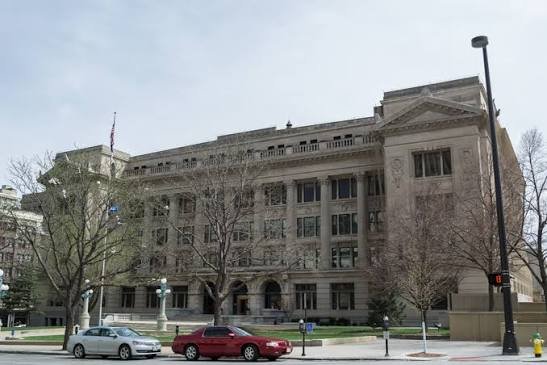
When Texas required all 254 counties to sign some form of immigration enforcement agreement with federal authorities by the end of 2026, Denton County didn’t wait around — it became the first county in North Texas to adopt the most expansive version available, the “task force model,” letting specially trained deputies perform immigration enforcement duties directly. That decision, made under Sheriff Tracy Murphree, says a lot about where Denton County stands right now on one of the more consequential local policy questions in the state. Home to more than 950,000 residents in the fast-growing corridor between Dallas and Fort Worth, here’s how the county’s government, jail, courts, and sheriff’s office actually work.

Denton County Quick Facts
| Category | Details |
| County Seat | Denton, Texas |
| Population | Over 950,000 |
| Governing Body | Denton County Commissioners Court |
| County Judge | Andy Eads |
| Sheriff | Tracy Murphree |
| County Address | 1 Courthouse Drive, Denton, TX 76208 |
| Main Jail Facility | Denton County Jail, Denton |
| Court System | Denton County District and County Courts |
| Time Zone | Central Time (CT), observes Daylight Saving Time |
A Growing County Consolidating Its Government
Denton County has been one of the fastest-growing counties in Texas for years, and its physical infrastructure has had to catch up. In 2021, the county opened a new four-story Administrative Courthouse at 1 Courthouse Drive, consolidating staff previously scattered between the historic Courthouse-on-the-Square and the Carroll Courts Building. The new building now houses the County Judge, Commissioners Court, County Administration, Budget, County Auditor, Treasurer, and several other core departments under one roof.
That consolidation reflects a broader pattern: since 2011, the Commissioners Court has approved six new judicial courts to keep pace with population growth, including the 431st, 442nd, 462nd, 467th, 481st District Courts and a second Probate Court — a genuinely rapid expansion of judicial capacity that tracks the county’s growth curve.
County Judge Andy Eads presides over the Commissioners Court, which handles budget and policy, while several offices — the Sheriff, District Clerk, County Clerk, and Tax Assessor-Collector — operate independently as elected officials.
The Sheriff’s Office and Its New ICE Partnership
Tracy Murphree has served as Denton County Sheriff for several years, leading the office through both the COVID-19 pandemic response at the jail and, more recently, a significant policy shift on immigration enforcement. In 2025, Denton County became the first North Texas county to adopt ICE’s “task force model” agreement, which goes further than basic cooperation agreements by allowing select deputies to directly perform immigration enforcement duties, including arresting individuals believed to be in the country illegally.
Sheriff Murphree has publicly noted the financial and administrative complexity of the arrangement — deputies handling these cases begin receiving federal pay for that work, requiring the department to sort out new logistics. Texas state law requires all 254 counties to have some form of immigration enforcement agreement in place by the end of 2026, meaning Denton’s move puts it ahead of many peer counties, including neighboring Dallas County, which has not adopted the same model.
Beyond that policy shift, the Sheriff’s Office handles the standard range of county law enforcement duties:
- Operating the Denton County Jail
- Patrolling unincorporated areas outside the county’s many incorporated cities
- Providing courthouse security and prisoner transport
- Serving civil process, including evictions and warrants
Finding Someone in the Denton County Jail
- The Sheriff’s Office maintains inmate information resources for locating individuals in custody
- Detention Officers handle booking, classification, and transport of inmates — a substantial share of the department’s day-to-day operations given the jail’s size
- Booking information typically takes a few hours to post after an arrest
- Bond can generally be posted at the jail or through the department’s approved payment system
- Visitation requires advance scheduling and valid photo ID
Courts and the Clerk’s Office
Denton County splits its court functions the way most Texas counties do: the District Clerk manages felony criminal cases, family law, and larger civil disputes, while the County Clerk handles misdemeanors, probate, and smaller civil matters, plus vital records. Both operate out of the county’s consolidated Administrative Courthouse or nearby court facilities in Denton.
A few practical points for anyone filing or researching a case:
- Case lookup is typically available online before an in-person visit is necessary
- Confirm which clerk’s office applies to your case type, since this distinction trips up a lot of first-time filers in Texas counties generally
- Self-help resources exist for people without an attorney, though staff can’t offer legal advice
- Given the county’s recent expansion of judicial courts, confirm which specific court and judge is assigned to your case before assuming an older court number is still current
A Few Practical Notes
- Bring photo ID to any county facility — courthouse, jail, or administrative building
- The new Administrative Courthouse at 1 Courthouse Drive consolidates many departments, so start there for general county business rather than the historic downtown courthouse
- If your matter involves a city police department rather than the Sheriff’s Office, check first whether your specific city (Denton, Lewisville, Flower Mound, Frisco’s Denton County portion) handles it independently
- Given the county’s new ICE task force agreement, individuals with immigration-related concerns interacting with the Sheriff’s Office should understand that select deputies now have expanded federal authority — consult legal counsel if this is relevant to your situation
Common Questions
Q1. What does Denton County’s ICE agreement actually mean for residents?
The Sheriff’s Office adopted the “task force model,” the most expansive of ICE’s cooperation agreements, allowing specially trained deputies to perform certain immigration enforcement duties directly, including arrests. This went into effect ahead of a state deadline requiring all Texas counties to have some agreement in place by the end of 2026.
Q2. How do I find out if someone is in the Denton County Jail?
Use the Sheriff’s Office’s inmate information resources to search for someone in custody. Allow a few hours after a recent arrest for booking information to appear before assuming there’s an error.
Q3. What’s the difference between the District Clerk and County Clerk for my case?
District Clerk handles felonies, family law, and larger civil suits. County Clerk handles misdemeanors, probate, and smaller claims, along with vital records like marriage licenses. If you’re unsure which applies, call either office to confirm before filing.
Q4. Where do I go for general county business now that Denton has a new courthouse?
Most core administrative functions — County Judge, Commissioners Court, Auditor, Treasurer, Human Resources — moved to the new four-story Administrative Courthouse at 1 Courthouse Drive in 2021. Confirm your specific department’s current location before visiting, since some functions may still operate from older buildings.