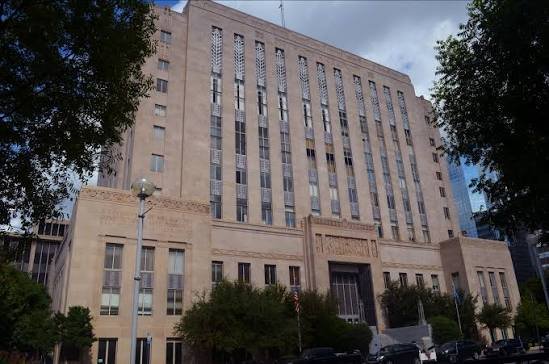
Two thousand two hundred inmates moved across town on the same February deadline. That was the scale of the operation when Marion County closed the old downtown jail and transferred its entire incarcerated population to a new $571 million Community Justice Campus on Indianapolis’s east side — a facility with automated record-keeping replacing decades of paper files. That move reshaped how the county’s justice system physically operates, and it’s a good starting point for understanding Marion County’s government, jail, courts, and sheriff’s office more broadly.
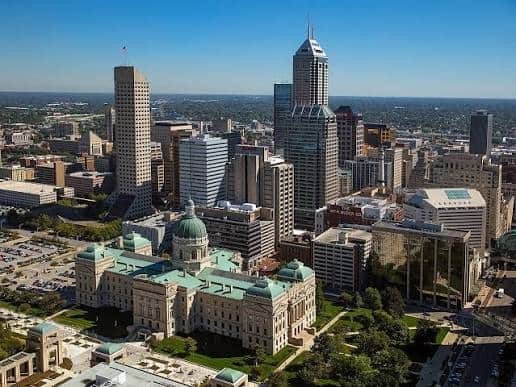
Marion County Quick Facts
| Category | Details |
| County Seat | Indianapolis, Indiana |
| Governing Structure | Unigov — merged Indianapolis-Marion County government |
| Mayor of Indianapolis | Joe Hogsett |
| Sheriff | Kerry Forestal |
| Sheriff’s Office Budget | Roughly $141 million (2024) |
| Main Jail Facility | Community Justice Campus (Adult Detention Center), Indianapolis |
| Former Jail Location | City-County Building, downtown Indianapolis (now vacant) |
| Court System | Marion Superior Court and Marion Circuit Court |
| Court Location | Community Justice Campus |
| Time Zone | Eastern Time (ET), observes Daylight Saving Time |
Unigov: One Government for the City and County
Marion County operates under Unigov, a 1970 consolidation that merged most of Indianapolis’s city government with Marion County government — similar in spirit to Jacksonville’s consolidation but structured differently. The Mayor of Indianapolis, currently Joe Hogsett, functions as chief executive for both city and county matters, while the City-County Council serves as the combined legislative body.
Unlike some consolidated governments, Unigov didn’t merge everything — several independently elected offices, including the Sheriff, Assessor, and Clerk, retained separate authority outside the Mayor’s direct control, and a handful of smaller incorporated towns within Marion County (like Speedway and Beech Grove) kept their own municipal governments and, in some cases, their own police departments.
What that means in practice:
- Most Marion County residents interact with a single combined administration through the City-County Building or relevant department offices
- The Sheriff’s Office, unlike Indianapolis Metropolitan Police, remains a separate constitutional office dating back to 1821, not a mayoral department
- Marion County spans nine townships, each historically with its own minor governmental functions layered on top of the consolidated structure
The Sheriff’s Office: An Old Constitutional Role, a New Building
Kerry Forestal leads the Marion County Sheriff’s Office, an agency whose roots as a constitutional office predate Unigov by 150 years. Because the Sheriff wasn’t folded into the mayor’s consolidated structure, the office retains its traditional independence and traditional duties — a genuinely different arrangement from Indianapolis Metropolitan Police, which does answer through the city’s chain of command.
The Sheriff’s Office responsibilities center heavily on:
- Operating the Marion County jail system, now consolidated at the Community Justice Campus
- Judicial enforcement — courthouse security and prisoner transport, historically based at the City-County Building
- Homeland security functions tied to protecting government buildings
- Civil process service, including evictions and warrants
Because Indianapolis Metropolitan Police handles the bulk of street-level patrol and investigations within the consolidated city, the Sheriff’s Office in Marion County functions much like sheriff’s departments in other large, mostly-urban counties — its identity is tied overwhelmingly to jail operations and court security rather than general patrol.
The Community Justice Campus: What Changed
For decades, Marion County ran two jails out of the aging downtown City-County Building, a facility county officials later estimated would cost at least $35.6 million just to repair. The new Community Justice Campus, built on the site of a former coke plant in the Twin Aire neighborhood, consolidated jail operations, courts, and related services into a single 770,000-square-foot complex. The transfer of the county’s roughly 2,200 inmates from the old facilities happened on a defined schedule, with different sheriff’s divisions moving out of the City-County Building in stages depending on which functions the new campus could support first.
For anyone dealing with the jail system today:
- All current bookings route through the Community Justice Campus’s Adult Detention Center, not the old downtown building
- The facility’s automated record-keeping means booking information should generally post faster than under the old paper-based system, though allow a few hours regardless
- The Sheriff’s Office maintains an online inmate search tool
- Bond can typically be posted at the jail or through approved online payment channels
- Visitation requires advance scheduling and photo ID — confirm current procedures, since the facility is still relatively new and processes have evolved since opening
Courts at the Same Campus
Marion Superior Court and Marion Circuit Court both relocated to the Community Justice Campus alongside the jail, putting courts and detention under one roof — a deliberate design choice meant to simplify prisoner transport and reduce the security overhead of moving detainees across the city for hearings.
A few practical points:
- Case dockets and calendars are available online through the Marion County court reference system
- Confirm which division — Superior or Circuit Court — handles your specific case type before filing
- Self-help resources exist for people without an attorney, though court staff can’t offer legal advice
- The Marion County Clerk’s office, a separately elected constitutional office, handles case filings and records independently of both the courts and the Sheriff’s Office
Before You Visit
- Bring photo ID to any government building, the jail, or the courts
- Head to the Community Justice Campus for jail and most court matters — not the old City-County Building, whose future use remains uncertain
- Confirm whether your issue falls under Indianapolis Metropolitan Police or the Sheriff’s Office, since patrol and jail functions are split between two different agencies here
- Parking at the newer Community Justice Campus is generally more available than downtown, but confirm current visitor access rules before a first visit
Common Questions
Q1. Is the old Marion County jail at the City-County Building still in use?
No. Inmates were fully transferred to the new Community Justice Campus, and the future of the City-County Building itself remains an open question for city officials, given the substantial repair costs estimated for the aging structure.
Q2. How do I find out if someone is in the Marion County jail?
Use the Sheriff’s Office’s online inmate search tool, which now reflects the Community Justice Campus’s automated record system. Allow a few hours after a recent arrest for the booking to appear.
Q3. Is the Marion County Sheriff the same as Indianapolis Metropolitan Police?
No. IMPD handles most street patrol and investigations within the consolidated city under Unigov, while the Sheriff’s Office remains a separate constitutional office focused primarily on jail operations, court security, and civil process.
Q4. Do all courts and case types now operate out of the Community Justice Campus?
Marion Superior Court and Marion Circuit Court both moved to the new campus, but always confirm the specific division and location for your case type through the court’s online docket system before assuming every matter is handled there.