A per capita death rate at the county jail higher than New York’s Rikers Island. That’s the number that put Pima County’s detention system under a microscope: nine deaths in 2020, ten in 2021, twelve in 2022, with Sheriff Chris Nanos telling county supervisors in a December 2022 memo that the jail had reached a “full-blown crisis” and a “life-threatening” population level. Pima County, anchored by Tucson and home to more than 1 million residents in the southern Arizona desert, has spent the years since working through what to do about it. Here’s how the county’s government, courts, jail, and sheriff’s office function today.
Pima County Quick Facts
| Category | Details |
| County Seat | Tucson, Arizona |
| Population | Roughly 1.07 million (2025 estimate) |
| Governing Body | Pima County Board of Supervisors |
| County Sheriff | Chris Nanos |
| Main Jail Facility | Pima County Adult Detention Complex, Tucson |
| Superior Court Building | 110 W. Congress Street, Tucson |
| Justice Court Building | 240 N. Stone Avenue, Tucson |
| Court System | Pima County Superior Court |
| Time Zone | Mountain Time (MST) — Arizona doesn’t observe Daylight Saving Time |
A Jail That Sparked a Countywide Reckoning
Pima County’s jail crisis didn’t happen overnight, but it became impossible to ignore around 2022, when in-custody deaths climbed to a pace that outside researchers found alarming even against national numbers. A local advocacy investigation found 38 deaths at or shortly after release from the jail between the start of 2022 and mid-2024. That pattern led the county to form a Blue Ribbon Commission tasked with figuring out whether to renovate the aging facility or build an entirely new one — options that came back carrying price tags in the hundreds of millions of dollars.
County Administrator Jan Lesher has pushed back on jumping straight to a new building, favoring smaller fixes like improved in-jail healthcare first. Supervisor Matt Heinz has raised a different angle: reducing how many people get sent to the jail in the first place, an idea advocacy group Just Communities Arizona has also pushed. As of this writing, the county hasn’t settled on a final direction, so anyone researching current jail conditions should check for the latest supervisors’ meeting outcomes rather than assuming any one plan is final.
A few structural facts about county government worth knowing:
- The Board of Supervisors sets budget and policy; the Sheriff, County Attorney, and other row offices are elected separately
- Pima County covers more than 9,000 square miles — one of the larger counties by land area in this series — so several departments run satellite offices outside downtown Tucson
- Arizona doesn’t shift clocks for Daylight Saving Time, which matters if you’re coordinating with the county from out of state
The Sheriff’s Office Beyond the Jail Crisis
Sheriff Chris Nanos has been a vocal, sometimes blunt public figure on the jail issue, going as far as directly asking supervisors to fund a new facility while advocates simultaneously called for reform focused on reducing incarceration itself — a genuine tension between the department running the jail and the people trying to shrink its population.
Outside the jail crisis, the Sheriff’s Office handles the standard range of county law enforcement functions:
- Patrol coverage of unincorporated Pima County, which is substantial given Tucson doesn’t extend across the entire county
- Running the Pima County Adult Detention Complex
- Court security and prisoner transport
- Criminal investigations, including the unit that responds to in-custody deaths
Detectives from the department’s Criminal Investigations Division routinely respond to in-custody deaths and, in nearly every publicly reported case, have found no signs of trauma or suspicious circumstances — a pattern reform advocates argue reflects gaps in how these deaths get investigated and reported, not necessarily their cause.
If You’re Trying to Locate Someone in Custody
- The Sheriff’s Office maintains a jail roster and inmate search tool online
- Given the jail’s documented health and mortality issues, families with specific medical or mental health concerns about a detainee should raise them directly and in writing with jail medical staff, and follow up
- Booking information typically takes a few hours to post after an arrest
- Bond can generally be posted in person at the jail or through the county’s approved payment channels
- Visitation requires advance scheduling and valid photo ID — call ahead, since rules have shifted periodically amid the facility’s ongoing scrutiny
Courts and the Superior Court System
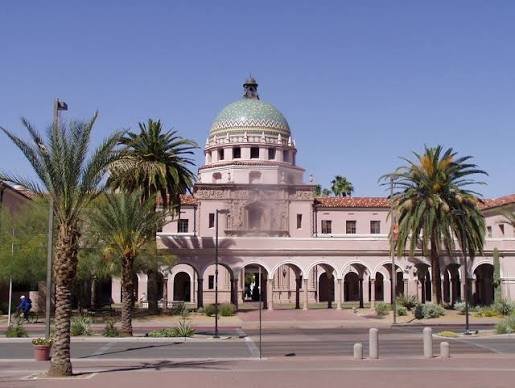
Pima County Superior Court moved out of the historic 1930 courthouse on Church Street years ago; that building is now the Southern Arizona Heritage & Visitor Center. Superior Court proceedings run out of a separate building at 110 W. Congress Street, while Justice Court — handling lower-level criminal matters and small claims — operates from 240 N. Stone Avenue.
A few things to know if you’re filing or researching a case:
- Confirm which building applies to your matter before heading downtown — Superior Court and Justice Court are in different locations
- Case records can often be searched online through the Superior Court’s case lookup before an in-person visit
- Self-help resources exist for people without an attorney, though staff can’t offer legal advice
- Given the county’s large geographic footprint, some case types may have satellite filing options outside central Tucson — check before assuming you need to drive downtown
Practical Notes Before You Go
- Bring photo ID to any county building, courthouse, or the jail
- Verify you’re headed to the correct courthouse building, since Superior and Justice Court are physically separate
- Arizona’s lack of Daylight Saving Time means the county runs on Mountain Standard Time year-round — double-check meeting or filing deadlines against your own local time zone if you’re not in-state
- Given ongoing jail reform discussions, call ahead for the most current visitation and safety procedures rather than relying on older information
Frequently Asked Questions
Q1. Is Pima County still planning to build a new jail?
As of the most recent reporting, the county’s Blue Ribbon Commission had presented options ranging from renovation to new construction, but no final decision had been locked in — county administration has leaned toward smaller interim fixes like improved healthcare rather than immediately committing to a new building. Check current Board of Supervisors meeting records for the latest status.
Q2. How do I find out if someone is in the Pima County jail?
Use the Sheriff’s Office’s online jail roster or inmate search tool with the person’s full name. If they were booked very recently, allow a few hours for the record to post before assuming something is wrong.
Q3. Why do so many in-custody death investigations report no signs of trauma?
Sheriff’s detectives investigate these deaths and have repeatedly found no trauma or suspicious circumstances in individual cases, but outside researchers and advocacy groups have separately raised concerns about the county’s overall in-custody mortality rate and how consistently these incidents are tracked statewide. The two things — individual investigation findings and the county’s aggregate death rate — are related but distinct issues worth understanding separately.
Q4. Which courthouse do I need for my case — Superior Court or Justice Court?
Superior Court, at 110 W. Congress Street, handles felonies and larger civil matters. Justice Court, at 240 N. Stone Avenue, handles lower-level criminal cases and small claims. Check your citation or case paperwork, or call ahead, since showing up at the wrong building means starting over.